

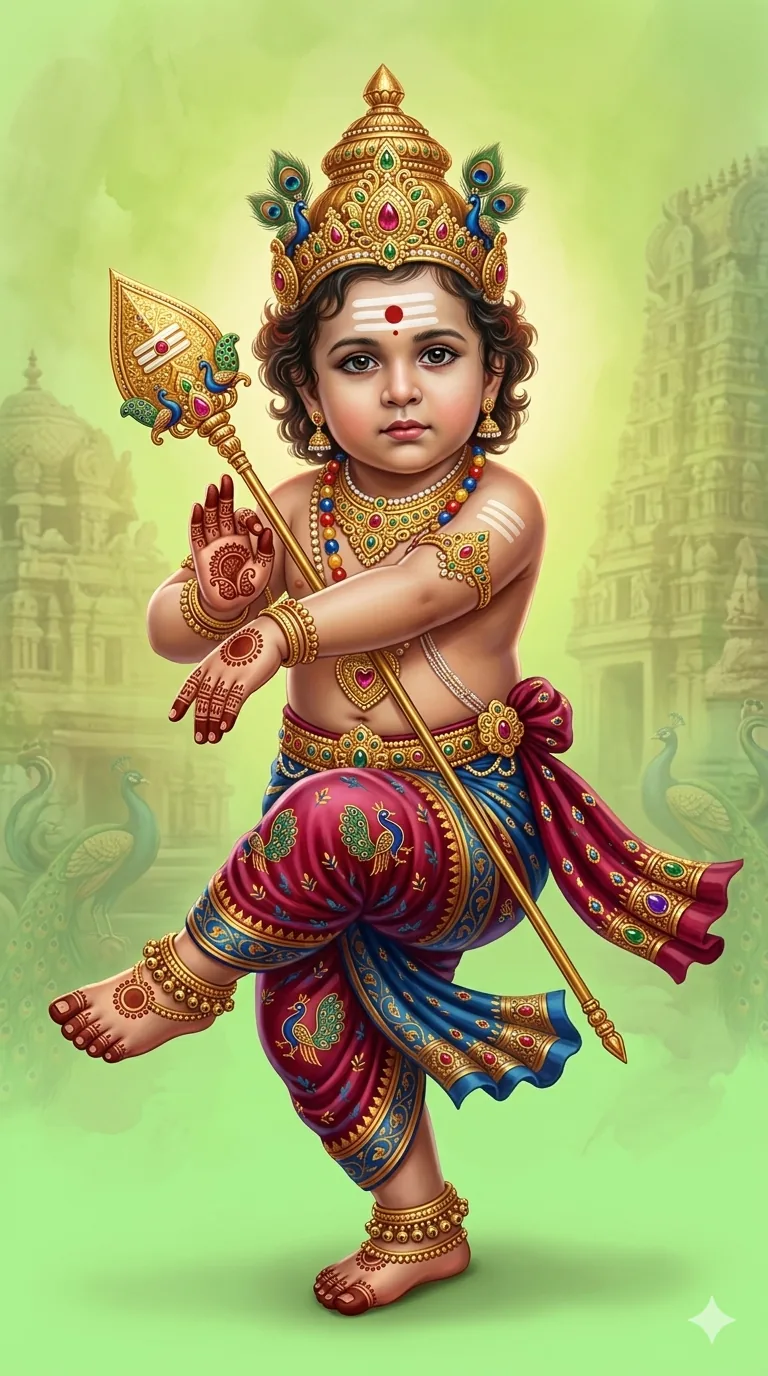
A life free of wants and possessions, gently turning every seeker toward the essence within — the quiet treasure that meditation reveals.
Bhakti — devotion — is the sole foundation here, and it welcomes every faith equally. Relatives, friends, familiar faces and new ones all stand in the same light. Each meeting works purely toward one thing: a solution for the need that brought you. The only priority recognized at the Guhai is the need itself.
At the Guhai, thiruneeru — the sacred ash — is offered in the name of “Tharaasu” (தராசு), the balance, and it is through Tharaasu that prasadham — the blessed share returned to the devotee — is given into every seeker’s hands. In this name the blessing is measured out, and in this name every seeker receives it.
For the troubles a seeker carries, Swamigal speaks with the kolgal — the planets themselves — and takes up the right solutions on their behalf. The heart’s grievances are eased away, and grace is granted.
Bhakti is the seeker’s own direct bond with God, and that bond alone carries every prayer here. It flows straight to Him — standing beyond friendship and relation, beyond closeness to the Guhai, long acquaintance or family ties. The bond itself is complete, and every seeker holds it whole.
Theetu (தீட்டு) is the age-old belief that for a time after certain events in a household — a birth, a death, a woman’s monthly days — a person carries ritual impurity and should stay away from holy places. At the Guhai this is said plainly and with full confidence: there is no theetu. Everyone is welcome to come, to visit and to pray — at any time, exactly as they are.
While observing a viratham — a vowed observance of prayer and fasting — eating remains essential — kandippaga, most certainly. Take arai vayiru, the half stomach: about half of what you would eat on an ordinary day. The vow is honoured with the body gently fed through every day of its observance — the measured half is itself part of the viratham.
Children hold the first place in affection, and their meeting comes at the close of the day — so that every elder’s question receives its complete, unhurried answer, and the children then receive undivided joy.
Women are seated six feet away. In this presence the divine energy moves strongly, and many women enter arulattam — a state of divine trance. The gentle distance keeps each visit whole, guiding it to the fulfilment it came for.
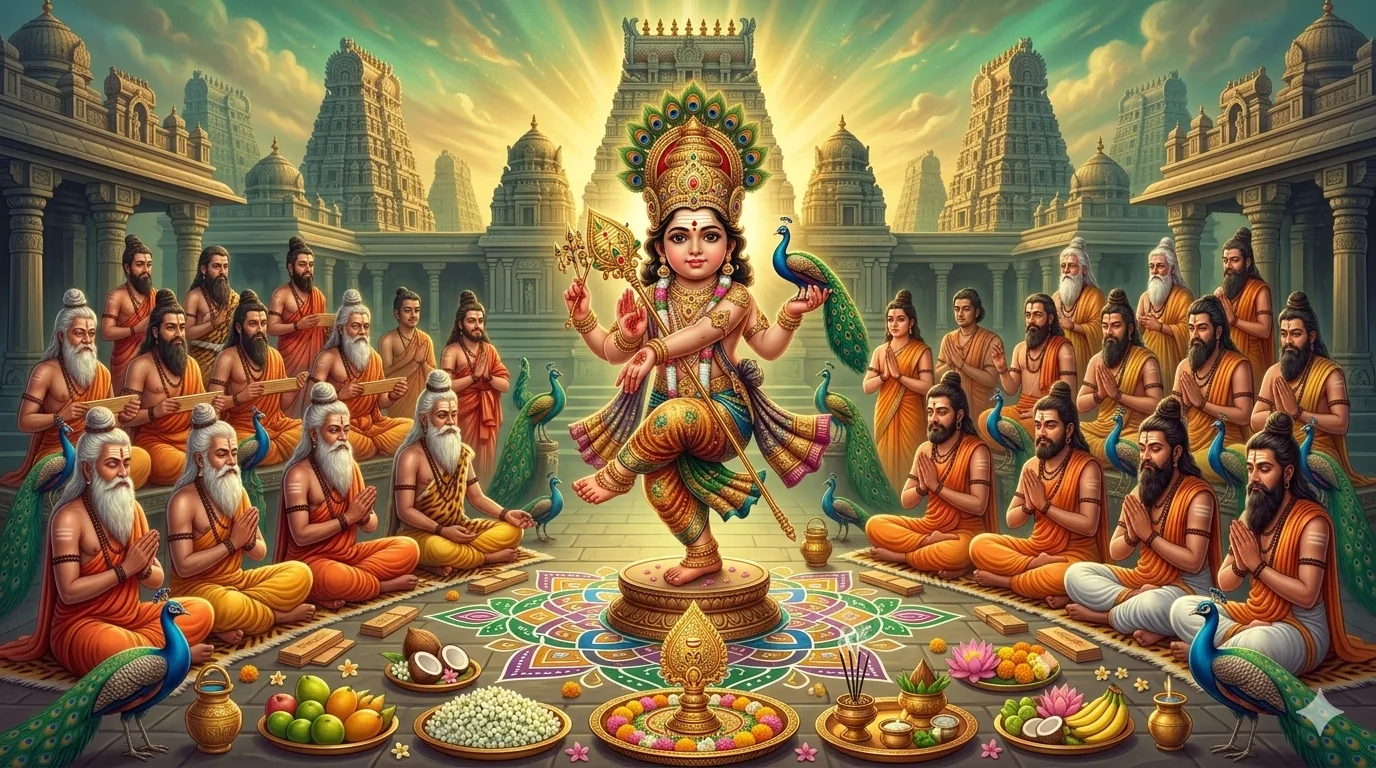
Suttiyur Solaiya Swamigal lives immersed in meditation — a living reminder of the deep peace that stillness brings. The present practice is mouna viratham — a vow of silence — and guidance flows still, carried in gesture, in glance, and in the rare, chosen words that rise out of that silence.
The service is free — beyond money, beyond recognition. Every seeker is encouraged to stand on their own path and grow into their own light. What the Guhai offers is direction: live cleanly, work honestly, and turn inward with simplicity. Those who visit describe a presence that serves purely from inner stillness, happiest when the seeker carries home the teaching itself.
Life at the Guhai is beautifully simple — and that simplicity is the teaching. The days flow around meditation, silence, and small acts of care, each one quietly radiating peace.
Meditation is home — the place where the whole day is lived. The vow of silence simply makes visible what has always been true here: stillness is the first language, and peace is its constant message.
Dogs live around the Guhai, and they settle into the meditation as if they belong there — quiet companions who share the same stillness. It is one of the gentlest signs of the peace this place carries.
To everyone who comes, tea is offered. All the giving flows one way — outward, freely, toward whoever is present.
When someone comes unwell, the healing begins with a calm, steady gaze into their eyes. When more is needed, money is pressed into their hands and they are sent to eat and recover — hands always open, always giving.
An oothupathi — the hand-rolled bidi — was always with him, and with it came his word: “Ungalukku onnu, ulagathukku onnu” — one for you, one for the world. In that rising smoke, devotees understand, karma itself is burnt away — and the body quietly takes its nourishment, fed in silence, in secret.
Most days he reached eagerly for a 7Up or a Bovonto — a simple taste holding a secret of its own. Its meaning rests beyond the reach of ordinary knowledge, and it is honoured just so: some things belong wholly to the mystery of the siddha way.
The teaching arrives in layers. Swamigal speaks in paripāṣai — a coded, poetic language — and its meaning unfolds exactly as far as each listener is ready to receive it. The same words carry a different depth for each person.
At the centre of everything, the teaching returns to one word: porul — the essence, the true substance beneath appearances. The words circle it, point at it, and let the seeker close the remaining distance themselves.
Because the language is layered, it is shared in quiet, chosen company, so that every word is received whole and clear. Understanding blossoms with readiness — a gift each seeker grows into through patience and practice.
“The essence is held in silence, waiting until you are ready for it.”
Devotion, in this teaching, is an inner feeling — deeper than any outer image. The divine is vaster than any single picture or face; every form is a doorway that opens toward a greater truth. Real worship lives in the quality of the inner soul, in the feeling the heart carries within.
It is a profound teaching, and a freeing one: it invites the seeker to rise beyond the comfort of a fixed image and to meet the divine as presence, as feeling, as essence.
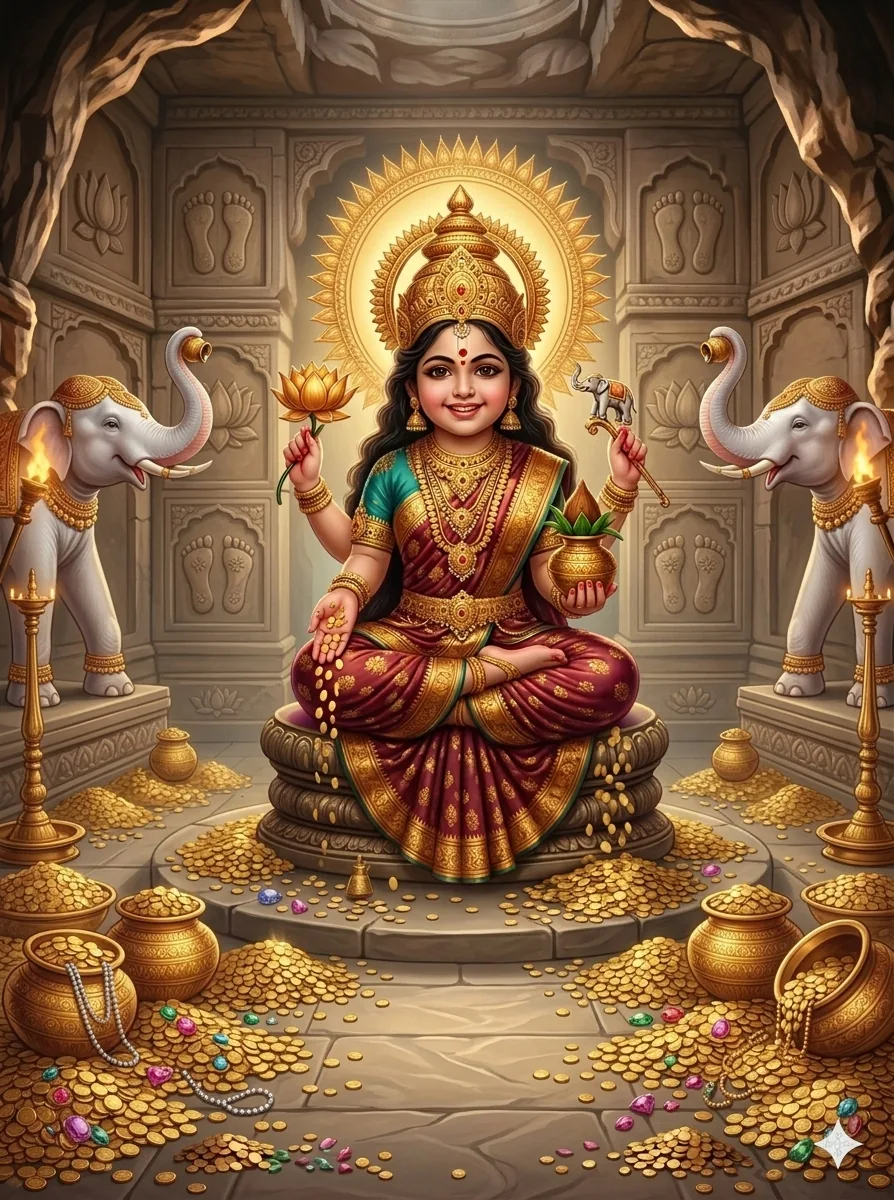
Padayal (படையல்) is the laying of an offering — food prepared with care and placed before the divine with devotion. It is laid seeking pon porul — gold and material prosperity — growth in one’s trade and profession, and the free flow of money. Come and lay it here at the Jeeva Samadhi — the sanctum where Swamigal abides in eternal meditation; and those who find themselves far away may lay it right where they are — on any day, at any hour, entirely as the heart wishes.
The space is cleaned and made bright, the lamp is lit, and flowers, kumkum and turmeric are set out. Food is prepared fresh, laid before the divine with prayer, and then shared as blessing. At the Jeeva Samadhi, the padayal is prepared purely vegetarian.
The instruments of one’s living and learning may also be laid in the padayal — the tools of one’s trade, a student’s books, everyday devices, the keys of one’s vehicle — with something as simple as a fruit or a bottle of water placed beside them. Each is set before the divine to receive the same blessing, so that the work it carries prospers.
It is a worship of welcome: the space itself becomes the shrine, and prosperity, harmony and grace are invited in. Simplicity is all it asks — cleanliness, a flame, an offering, and a heart that gives.
“Every day is right, every hour is open — the offering may be laid whenever the heart is ready.”
Lay the padayal with full nambikkai — confidence. Name the need as you place it — the growth you seek in your work, the prosperity you pray for — and leave it there in trust. Whether it is a full spread or a single fruit, a padayal is measured by the devotion that lays it, and devotion makes every offering complete. Your own hands may place it, your own words may carry the prayer; offered in faith, it returns as blessing.
Grace reaches you through the pancha bhoothas — the five great elements themselves. Water, the Tharaasu, the breeze, the planets of the sky, and the bare earth underfoot: each carries its own blessing to everyone who comes.
Those who come to the Jeeva Samadhi may bring water — and each visitor should bring it themselves, in their own water bottle. The water receives the blessing and travels home with you.
Through the Tharaasu — the balance — thiruneeru and prasadham are given into your hands, grace measured out for each seeker.
In the moving air of this place, a feeling makes itself known — grace arriving on the wind, felt before it is understood.
From the kolgal — the planets above — comes asirvatham, their blessing, showered upon all who stand at the samadhi.
It is special to make the walk on foot, every step pressing into the bare ground and its sand — the earth itself offering its blessing through the soles of the feet.
“Whether we stand or walk — it is all His doing.”
A line from the devotional writing, Aha Sara Muga Malar
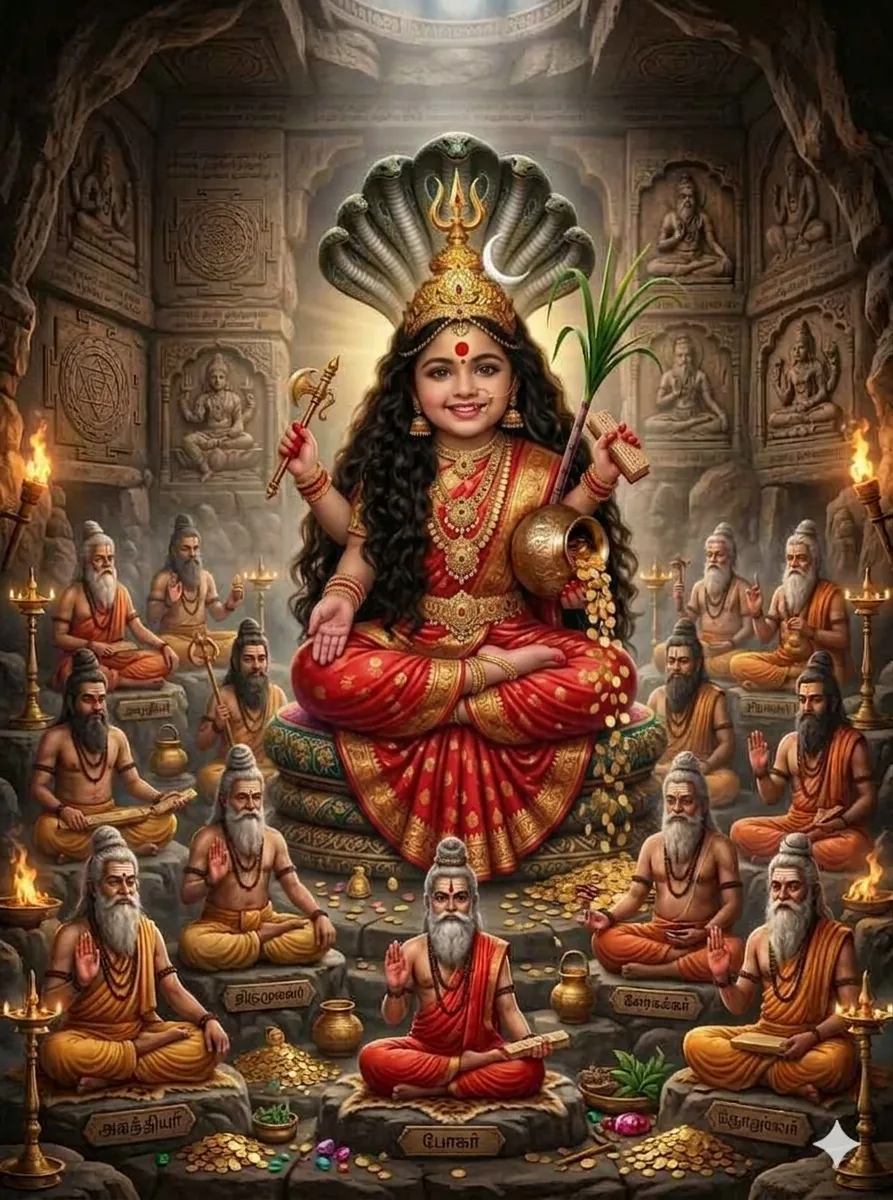
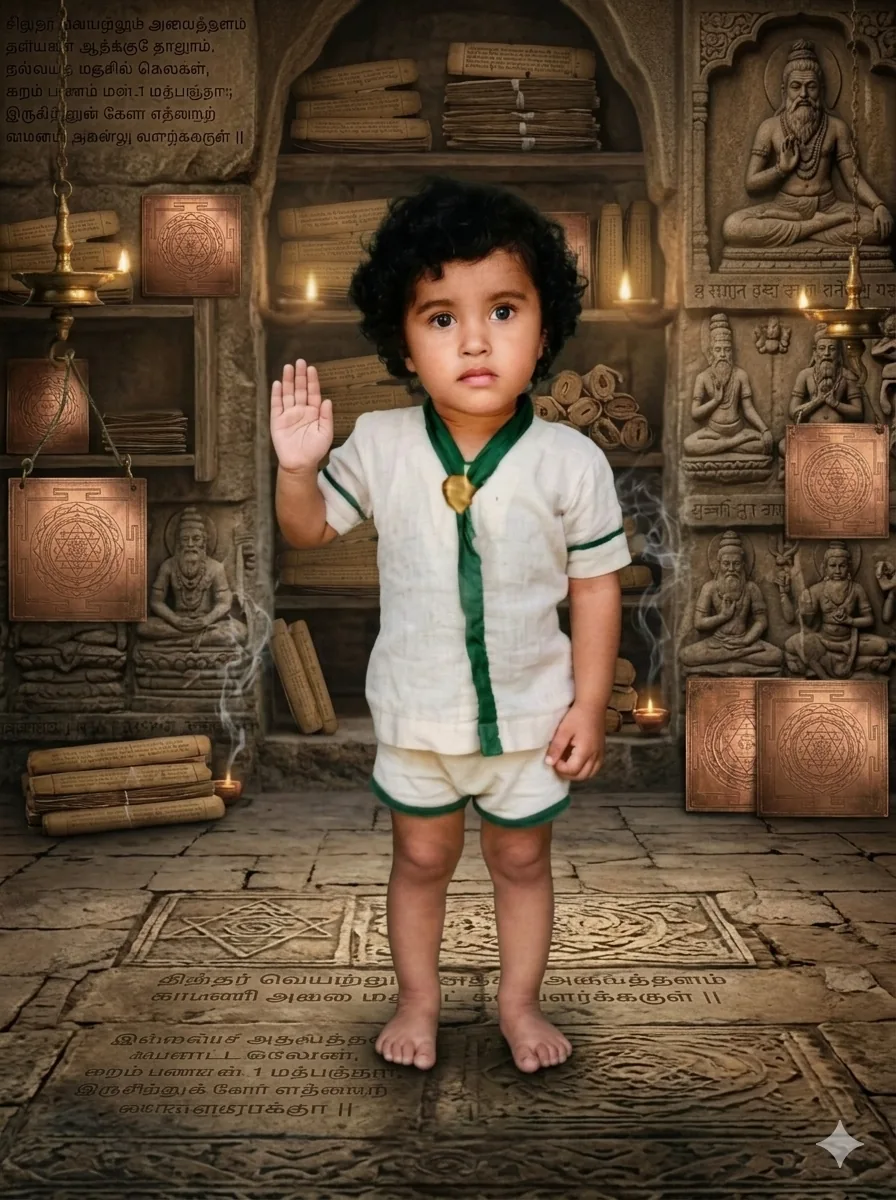
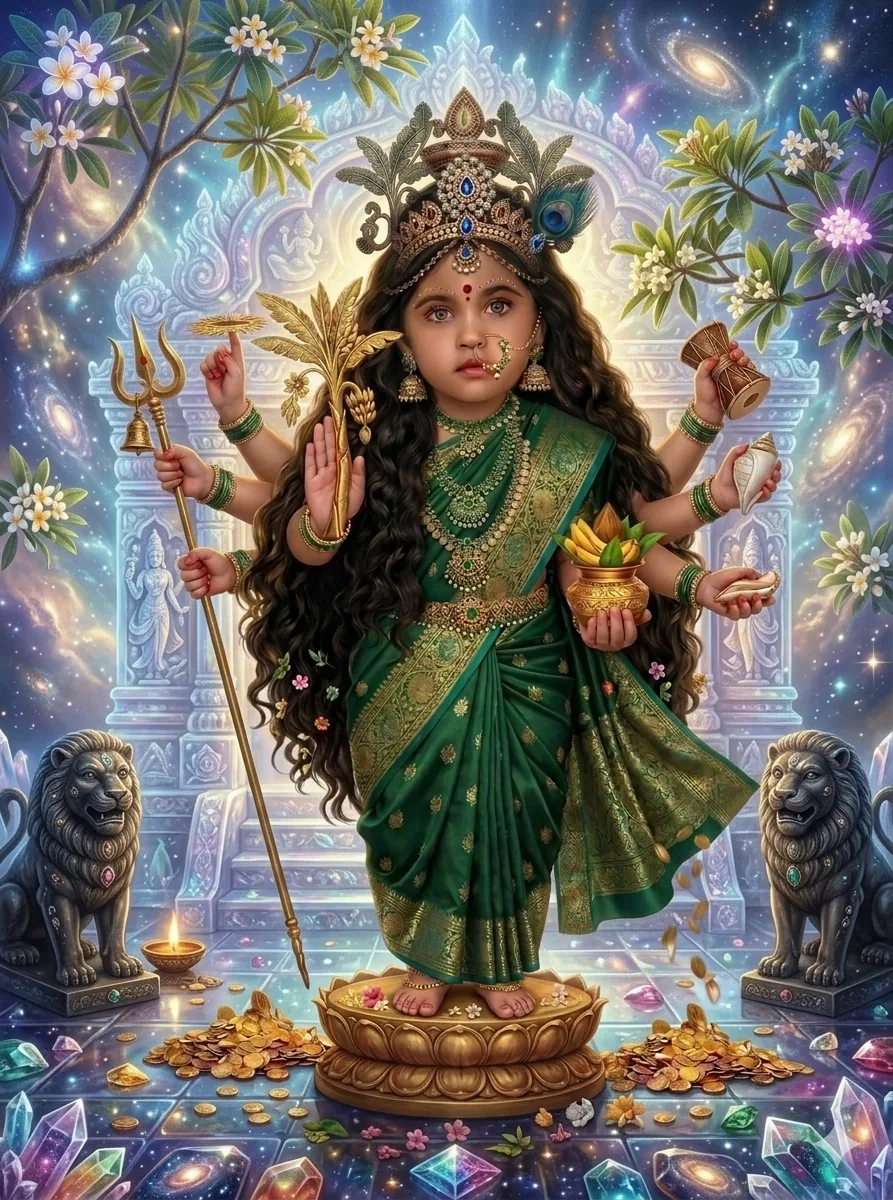
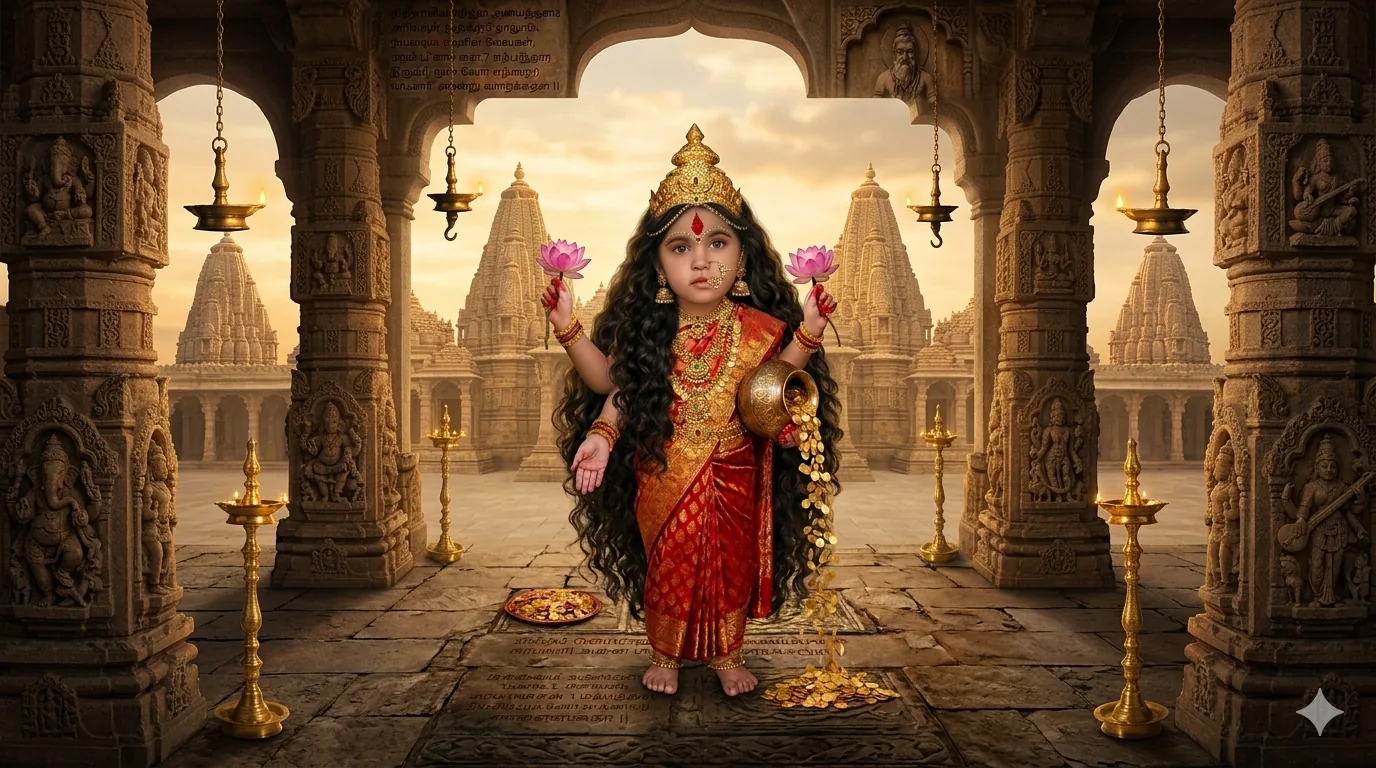
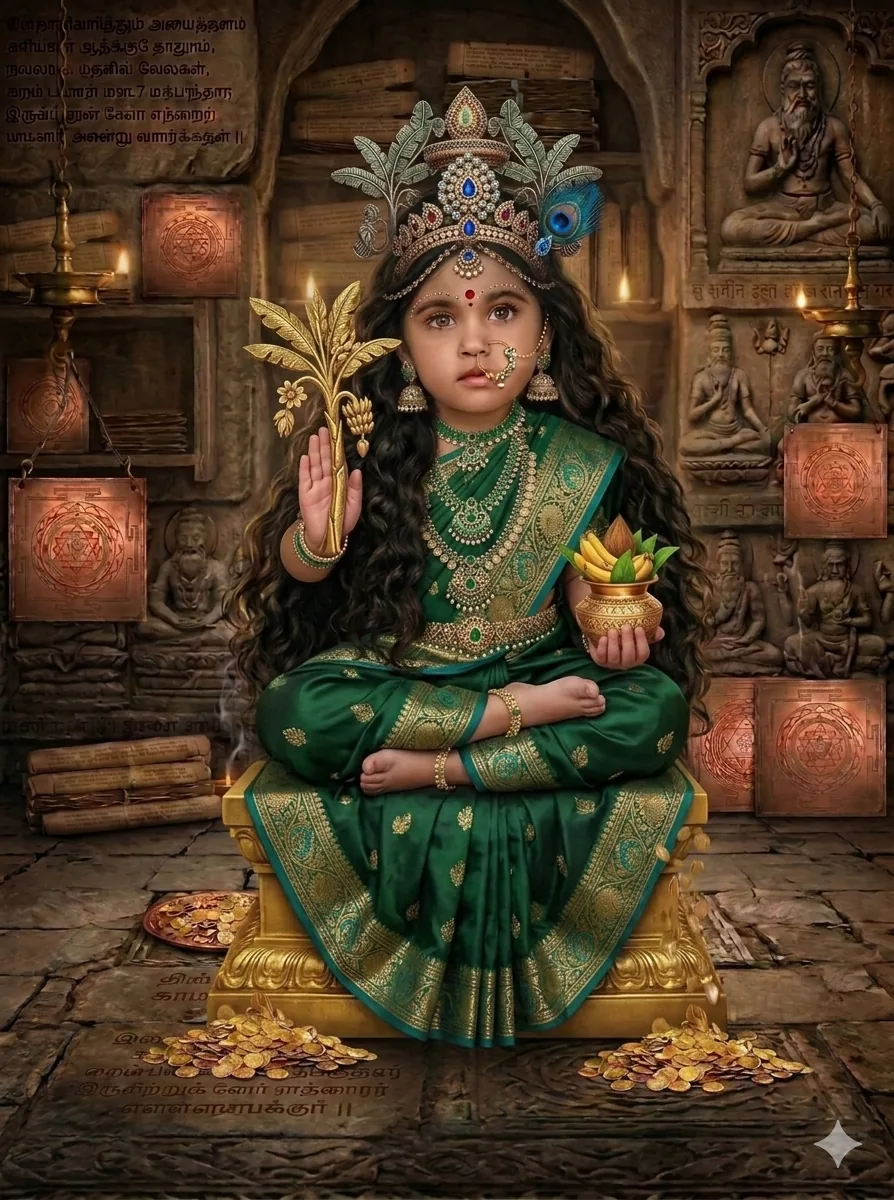
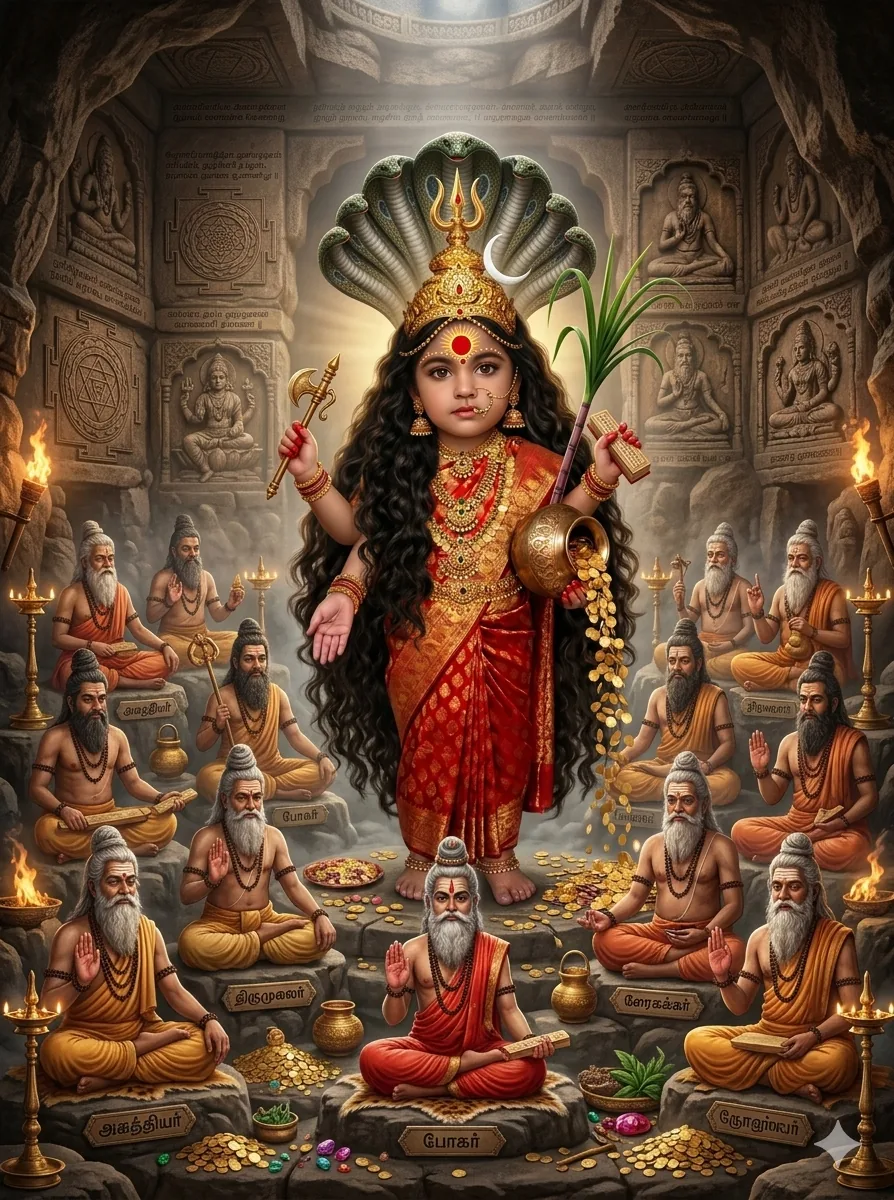
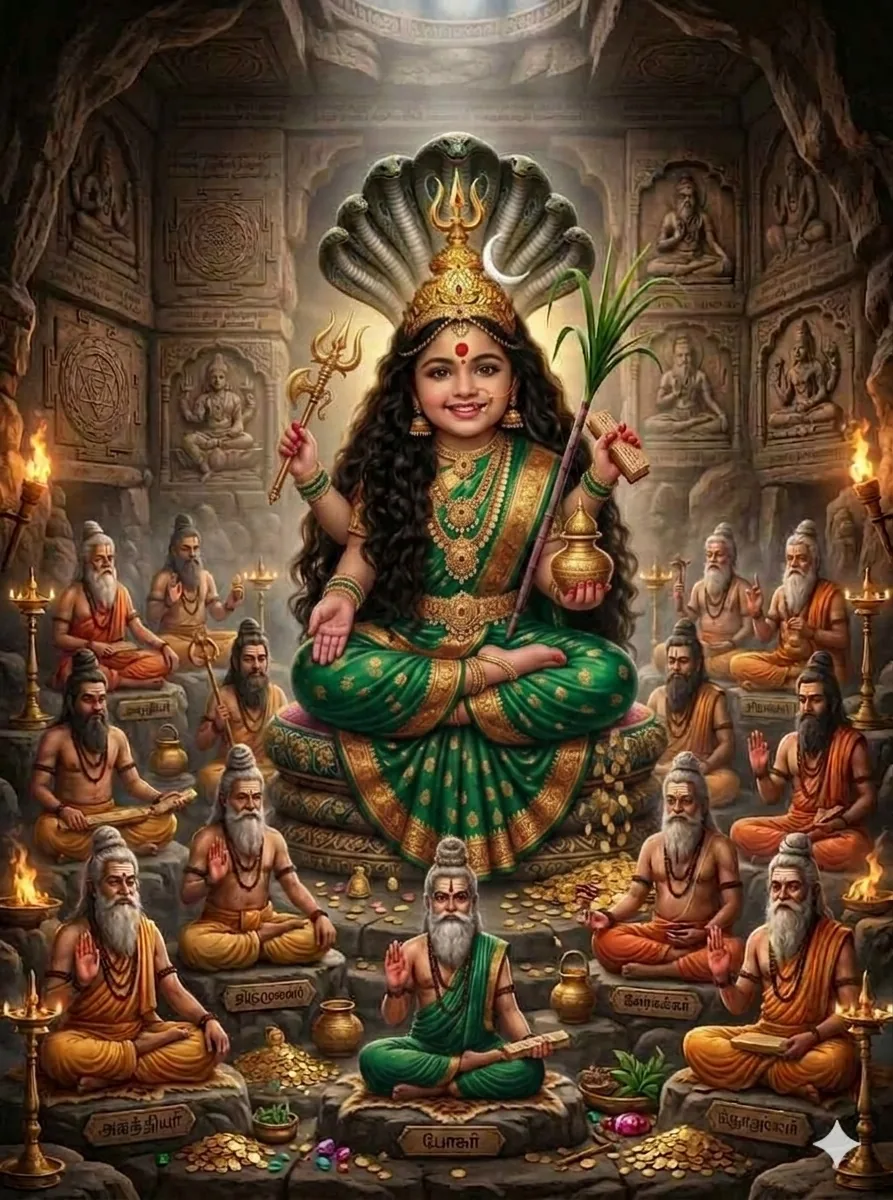
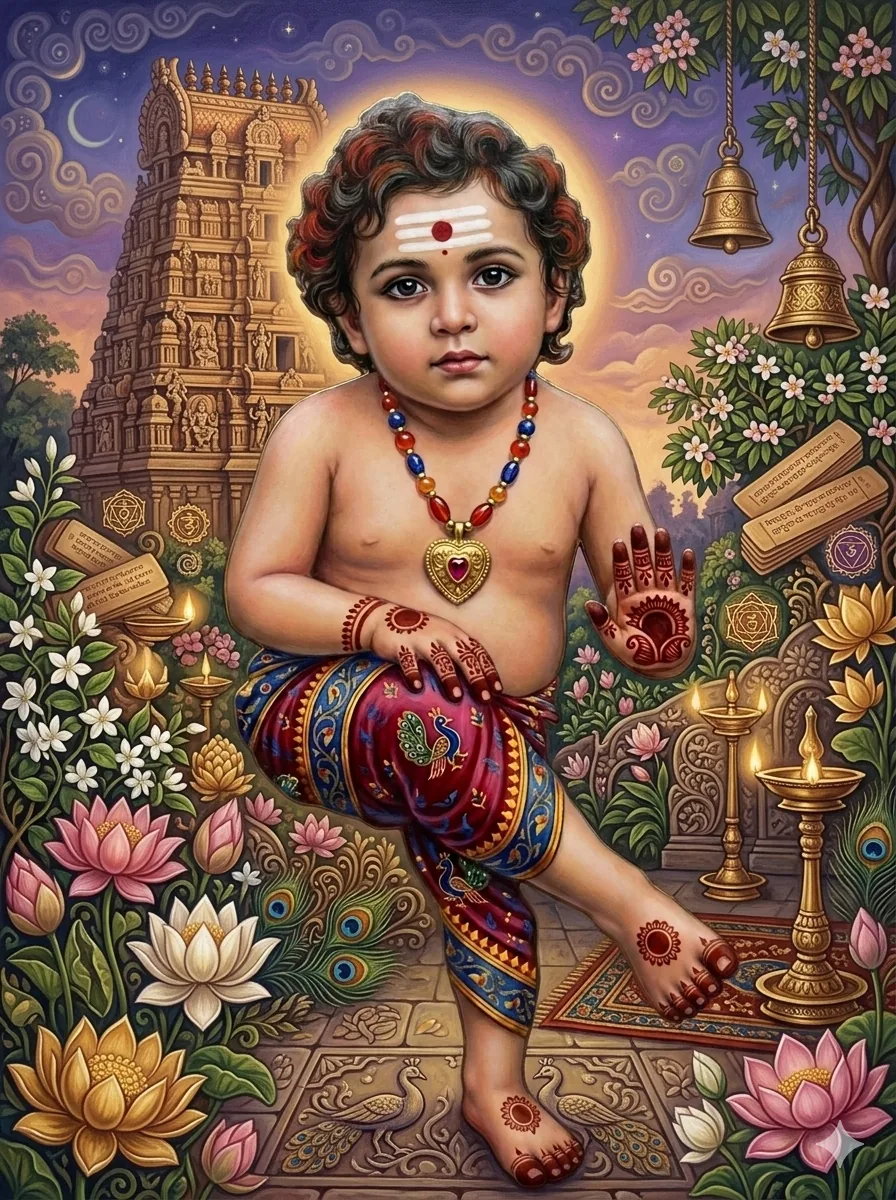
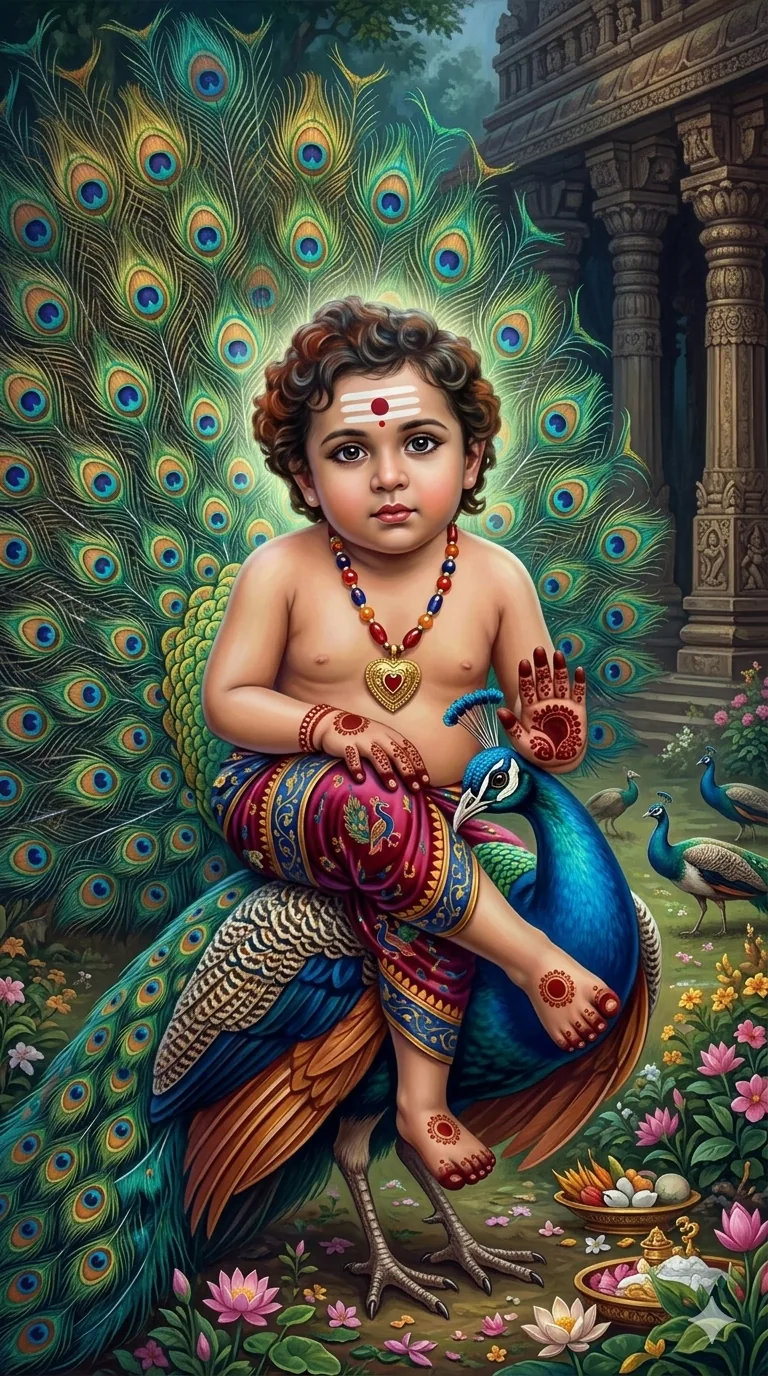
Alongside guiding those who came seeking spiritual support, Swamigal served the work of the temple and authored two books on what pure devotion truly is, and on the discipline and principles a person should carry through daily life and through their whole life.
A book on pure devotion — and on the principles and disciplines every person should understand and follow, in daily living and across a lifetime.
Read the book (PDF) →A companion volume gathering the worship of Sri Mukkurunathar, its practices and invocations, and the foundations of genuine bhakti.
Read the book (PDF) →Both books belong to the worship of Arulmigu Sri Mukkuru Thirukovil — the peedam at Koombur, Dindigul, where the deity Sri Mukkurunathar unites Vinayakar, Nagar and Anjaneyar in a single form. The temple was consecrated on Tuesday, the 25th of August 2015 — the 9th day of Avani month in the Tamil year Manmatha, under the auspicious Moola nakshatram. A mobile app, Sri Mukkuru, carries the same blessings to devotees everywhere in the world.
Come for darshan — the blessing of the sacred sight — at the peedam, the temple’s holy seat, or explore the writings and the temple’s details through the Sri Mukkuru app.